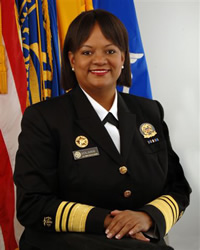
Vice Admiral Regina M. Benjamin, MD, MBA

Regina M. Benjamin, MD, MBA is the 18th Surgeon General of the United States. As America’s Doctor, she provides the public with the best scientific information available on how to improve their health and the health of the nation. Dr. Benjamin also oversees the operational command of 6,500 uniformed public health officers who serve in locations around the world to promote, and protect the health of the American People.

From her early days as the founder of a rural health clinic in Alabama – which she kept in operation despite damage and destruction inflicted by hurricanes Georges (1998) and Katrina (2005) and a devastating fire (2006) – to her leadership role in the worldwide advancement of preventive health care, Dr. Benjamin has forged a career that has been recognized by a broad spectrum of organizations and publications. She currently serves as chairman of the National Prevention Council, making her the first U.S. Surgeon General in history to bring together seventeen federal agencies to develop a National Prevention Strategy. Dr. Benjamin has a B.S. in chemistry from Xavier University, New Orleans, an M.D. degree from the University of Alabama at Birmingham and an MBA from Tulane University. She attended Morehouse School of Medicine and completed her family medicine residency in Macon, Ga.  Dr. Benjamin holds 15 honorary degrees. 

Dr. Benjamin is former associate dean for Rural Health at the University of South Alabama College of Medicine in Mobile and past chair of the Federation of State Medical Boards of the United States. In 1995, she was the first physician under age 40 and the first African-American woman to be elected to the American Medical Association Board of Trustees. She served as president of the American Medical Association Education and Research Foundation and chair of the AMA Council on Ethical and Judicial Affairs. In 2002, she became the first African-American female president of a state medical society in the United States when she assumed leadership of the Medical Association State of Alabama.

Dr. Benjamin is a member of the Institute of Medicine – the health arm of the National Academy of Sciences, which was chartered under President Abraham Lincoln in 1863. She is a fellow of the American Academy of Family Physicians. She was chosen as a Kellogg National Fellow and a Rockefeller Next Generation Leader. Past board memberships include the Robert Wood Johnson Foundation, Kaiser Commission on Medicaid and the Uninsured, Catholic Health Association, and Morehouse School of Medicine. She was named by Time magazine as one of the “Nation’s 50 Future Leaders Age 40 and Under.” She was featured in the 1995 New York Times article, “Angel in a White Coat;” the December 1999 cover of Clarity magazine; in the 2002 People magazine’s article, "Always on Call;” and was featured on the January 2003 cover of Reader’s Digest as one of the national publication’s"Everyday Heroes." She was also named “Person of the Week” on ABC’s World News Tonight with Peter Jennings, and “Woman of the Year’ by CBS This Morning. 

In 1998, Dr. Benjamin was the United States recipient of the Nelson Mandela Award for Health and Human Rights. She received the 2000 National Caring Award which was inspired by Mother Teresa and was recognized with the Papal honor Pro Ecclesia et Pontifice from Pope Benedict XVI. In 2008, she was honored with a MacArthur Genius Award Fellowship. In March, Dr. Benjamin became the recipient of the 2011 Chairman’s Award during the worldwide broadcast
of the 42nd NAACP Image Awards.


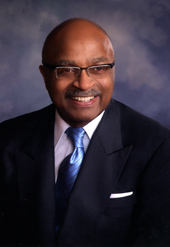
Dr. L. D. Britt

Dr. L. D. Britt is a nationally renowned surgeon and philanthropist with many leadership roles in academic surgery and community service. A native of Suffolk, Virginia, Dr. Britt graduated Valedictorian from Booker T. Washington High School in 1968. He then completed his undergraduate work at the University of Virginia where he graduated with honors. After that he attended Harvard Medical School and Harvard School of Public Health where he graduated with a doctorate of medicine and a masters of public health. He then completed a residency in general surgery at the University of Illinois and Cook County Hospitals. During his residency, he dedicated three years to basic science research. His training in surgery was continued at the Maryland Institute for Emergency Medical Services where he completed a fellowship in trauma and surgical critical care.

After training, Dr. Britt took a faculty position with the Department of Surgery at Eastern Virginia Medical School where he became chief of trauma, professor of surgery and later the first African American to obtain an endowed chair of surgery. Education has always been one of Dr. Britt's strongest callings with numerous teaching awards from deans, medical students and his devoted surgical residents. He has received the Outstanding Faculty award from the governor of Virginia, the William H. Sinkler Award from the National Medical Association, the Association of Surgical Education Distinguished Educator Award, the Distinguished Service Medal from the Uniformed Services University and the Alpha Omega Alpha Robert J. Glaser Award from the American Association of Medical Colleges, the highest education award in medicine.

Dr. Britt has received several honorary doctorates and has been a distinguished guest professor with over 160 invited lectures given at academic institutions across the country. He has authored over 45 book chapters and 155 peer-reviewed publications and is on the editorial staff of eight peer-reviewed surgical journals. His research interests have led to over 2.8 million dollars in grant money and he maintains a basic science lab investigating the role of various cellular mediators in septic shock. Dr. Britt's commitment to surgical education has also earned him a seat on the American Board of Surgery, the Executive Board of the National Board of Medical Examiners and Chairmanship of the Accreditation Council of Graduate Medical Education Residency Review Committee for Surgery. He has also served on the National Institutes of Health SOH Study Review Panel.

Leadership roles have placed Dr. Britt on 37 different regional, national and international professional societies including the American Surgical Association. He is past president of the Southeastern Surgical Congress, the Halsted Society, the National Medical Association Surgical Section, Society of Black Academic Surgeons, the Society of Surgical Chairmen, the Southern Surgical Association and is President of the American Association for the Surgery of Trauma. President George W. Bush appointed Dr. Britt to the Uniformed Services University of Health Sciences Board of Regents which was confirmed by the U.S. Senate in 2002.

The American College of Surgeons has called on Dr. Britt for numerous responsibilities and leadership positions in its quest for scientific development, education and patient safety. He has served as Senior Consultant and Vice Chairman for the Committee on Trauma, the Executive Council for the Committee of Surgery Education and the Surgical Education Self Assessment Program Committee. He is past chairman of the Board of Regents and President-elect of the American College of Surgeons.

Community service has earned Dr. Britt such awards as the B'nai B'rith Great American Traditions Award, the NAACP Man of the Year Award and an Emmy from the National Academy of Television Arts and Sciences: Youth Violence: a Call to Disarm. Dr. Britt has also been a long standing Executive Board Member of the Boy Scouts of America and sits on numerous scholarship committees and college boards.

Dr. Britt's illustrious career is highlighted with many "firsts" and "numerous" titles when recalling all of his accomplishments and contributions. He could only achieve more if there were more hours in the day. Despite his commitments, he has found time to marry a lovely and charming fellow physician and closest supporter , Dr. Charlene Britt. They have an equally charming and lovely daughter Avery Marie Britt. Dr. Britt calls the Surgery Department at EVMS one big family and perhaps his greatest admirers are the surgery residents he has personally trained and benefited with his infinite wisdom, surgical prowess, high standards and impeccable work ethic.

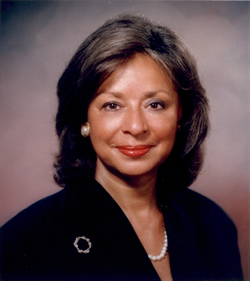
Dr. Vivian Pinn

In her role as director of the Office of Research on Women's Health (ORWH), Vivian Pinn is in a unique position to help ensure that women's health issues and women are well represented in NIH research efforts. In many ways, her current role is the culmination of a lifelong focus on medicine and advocacy for access to good health care for everyone.

Before coming to NIH, Pinn was professor and chair of the Department of Pathology at Howard University. Previously, she held teaching appointments at Tufts University and Harvard Medical School. At Tufts she was assistant dean for student affairs and an advocate for minority students.

Born to modest circumstances in Lynchburg, Virginia, Pinn grew up during the era of segregation, and the city schools she attended were segregated. From an early age, she knew she wanted to be a doctor despite the fact that she did not know any women doctors. As a girl, she helped to care for her grandparents, who had health problems (even giving her diabetic grandmother her insulin shots).

Her interest in women's health and women's issues grew out of this experience and from a profound personal loss. When Pinn was 19, her mother became ill. The medical professionals who attended to her did not take her health complaints seriously. The doctor who examined her mother, Pinn recalls, "dismissed my mother's complaints, prescribing special shoes and exercise for her painful back aches." Shortly thereafter, her mother died of bone cancer!

Fueled by her deep loss, Pinn was determined to become a doctor and her family supported her dream. She earned a scholarship to Wellesley College-a women's college with a supportive environment, graduated in 1962 and enrolled in medical school at the University of Virginia. As the only African-American and only woman in her class, she was doubly distinguished.

While Pinn intended to become a pediatrician, during a summer internship at Massachusetts General Hospital, in Boston, she developed a passion for research. Of those years, she recalls, "I learned to manage challenges by viewing them as a source of excitement and opportunity, instead of fearing them. With so few women in medicine in the 1960s and 1970s, I was often only one of the few involved in my chosen professional activities. My philosophy then and now is not to let obstacles, no matter how great, stand in the way of accomplishing your goals. To do this, you have to be intellectually prepared and dedicated."

The recipient of numerous awards and honors, Pinn is past president of the National Medical Association. She received the Elizabeth Blackwell Award from the American Medical Women's Association, in 1995, the year she was elected to the National Academies of Science Institute of Medicine. She is a fellow of the American Academy of Arts and Sciences, as well.
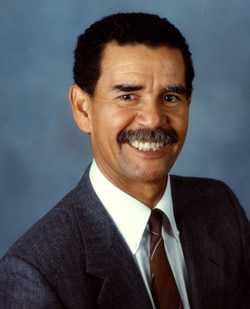
Dr. Anthony A. René

Dr.  René recently retired from the National Institutes of Health, the Department of Health and Human Services with 50 years of Federal Service. He was an Assistant Director in the National Institute of General Medical Sciences.  He received his B.S. degree in Biology from Southern University and his Ph.D. degree in Cell Biology from Catholic University of America. His Federal service includes research and research administration. His job at the NIH involved the oversight of research programs and research training programs that offered internship opportunities for students in high school, college, graduate school, as well as postgraduates and faculty at universities, medicals, and colleges throughout the U.S. Over the years he has receive special recognition for his work as a mentor of student and university faculty and for the recruitment of students into biomedical and behavioral research careers. Dr. René’s worked with the disabled, women and the underserved recently earned him a distinguished professional mentor award from the Society for the Advancement of Chicanos and Native Americans in Science, and three NIH Director’s Awards of Merit.  Since his retirement he has continued to work as a volunteer at the NIH with students who are pursuing careers in biomedical research. He is also an active participant in the “Welcome Home Program” in Montgomery County Maryland, for inmates who are within six months to a year of being released from prison.